Almased

>
Vitamin K-2 - A Key Player in Cardiovascular and Bone Health

by Karen Lee Richards*
Source: ProHealth.com

Vitamin K-2 has been tucked away in the shadows of the vitamin world for too long. Its significance to cardiovascular and bone health and its apparent link to the prevention of many other diseases make it too important to ignore.

Vitamin K - the least familiar of the alphabet vitamins - is a key player in cardiovascular and bone health. Originally scientists thought its only purpose was to promote proper blood clotting, but we're now learning that vitamin K plays a number of other important roles in the body.

The first clue to the existence of vitamin K came in 1929 when Danish scientist Henrik Dam set out to study the role of cholesterol. Several weeks after he began feeding chickens a cholesterol-depleted diet, they developed hemorrhages. When he could not stop the bleeding by adding purified cholesterol to their diet, he realized that along with the cholesterol, a second compound must have been removed from their diet.

Because of its effect on the blood's ability to clot, the newly discovered compound was dubbed the coagulation vitamin. Since the finding was reported in a German journal, the German spelling of “Koagulation” was used, which later led to the shortened version - vitamin K.

Building upon Dam's discovery, American biochemist Edward A. Doisy uncovered the structure and chemical nature of vitamin K. Their combined efforts were rewarded in 1943 when Dam and Doisy received the Nobel Prize for medicine for their work on vitamin K.

There are two naturally occurring forms of vitamin K: phylloquinone (vitamin K-1) and menaquinones (25-hydroxyvitamin Ditamin K-2).

  • K-1 is found in dark green, leafy vegetables like spinach, broccoli, kale and Swiss chard.

  • K-2 can be found in meat, egg yolks, and fermented foods like cheese and natto (Japanese fermented soy beans). K-2 is also synthesized naturally in the gut by microflora ('good' bacteria) fermentation.

Vitamin K2's Role in Cardiovascular Health

Research has shown that K-2 is the vitamin K form most beneficial for cardiovascular health.

A paper published in 2004 reported on The Rotterdam Study, which involved 4,800 people over a 10-year period. The researchers found that the increased intake of Vitamin K-2 reduced the risk of coronary heart disease mortality by 50%. Vitamin K-1 had no effect at all.(1)

Most heart attacks and strokes are caused when plaque builds up on the inner walls of the arteries. Eventually a section of plaque can break open, forming a clot which then travels to the heart resulting in a heart attack, or to the brain resulting in a stroke.

Standard treatment for patients at risk of a heart attack or stroke is usually aimed at thinning the blood so clots cannot form. Patients are instructed to take an aspirin every day or they are prescribed blood thinners like Coumadin or Plavix. The problem with those treatments is that, if the patient is injured, it may be difficult to stop the bleeding because the medications interfere with the blood's ability to clot.

Vitamin K-2 on the other hand, seems to be the body's natural mechanism for regulating the clotting factor.

Dutch Professor Cees Vermeer found that vitamin K inhibited clotting when blood vessels were intact - yet promoted clotting when the blood vessels were broken. Which is exactly how the body should work.(2)

Arterial calcification is a significant risk factor for atherosclerosis, heart attack and stroke. In the past, it was thought that this calcification was irreversible and signaled the end stages of cardiovascular disease. However, a 2007 study using rats found that diets rich in vitamin K actually reduced the arterial calcification by approximately 50%.(3)

Promoting Bone Health - Preventing Osteoporosis

Japanese women tend to have far fewer osteoporosis fractures than Western women. It is thought that their consumption of the popular Japanese food natto, which is high in Vitamin K-2, may have a lot to do with it.

A 1995 study in Japan compared vitamin K levels in the blood of 24 women who had osteoporotic fractures and 36 elderly women who had no fractures. While vitamin K-1 levels were virtually identical in both groups, Vitamin K-2 levels were twice as high in the group with no fractures compared to the group with fractures.(4)

Additionally, two very large studies also link vitamin K levels to the risk of osteoporotic fractures:

  • In the Nurses' Health Study, researchers followed more than 72,000 women for 10 years. The women whose vitamin K intake was in the lowest fifth of the group had a 30% higher risk of hip fracture.(5)

  • In the Framingham Heart Study, more than 800 elderly men and women were followed for seven years. Those whose vitamin K intake was in the top quarter of the group had a 65% lower risk of hip fracture.(6)

Other studies have demonstrated Vitamin K-2's ability to protect osteoblasts (the cells that build new bones) from self-destructing, while inhibiting the formation of osteoclasts (the cells that destroy bones).(6-7)

As we age, bone destruction tends to overwhelm bone building, but Vitamin K-2 can help slow down and even reverse that process.

Additional Benefits of Vitamin K-2

Diabetes - A 2010 Netherlands study followed more than 38,000 people for a decade and found that higher intake of vitamin K was associated with a lower risk of developing type 2 diabetes. Both vitamins K-1 and K-2 resulted in lower risk, but there was a stronger connection to the K-2. For each 10 mcg of Vitamin K-2 that was regularly consumed, there was a 7% reduction in risk.(8)

Cancer - German researchers studied more than 24,000 participants for 10 to 14 years. They found that those with the highest intake of Vitamin K-2 had a 62% reduction in the risk of lung cancer and a 35% reduction in the risk of prostate cancer. They also found that those with the highest intake of Vitamin K-2 who did get cancer experienced a 28% lower risk of dying from it.(9)

In another recent study conducted by the Mayo Clinic, researchers reported that the risk of developing Non-Hodgkin lymphoma was approximately 45% lower for participants whose vitamin K intakes were in the top 25% of the group.(10)

Need-to-Know Facts About Vitamin K-2

  • Vitamin K is fat soluble and should be taken with a meal containing fat.

  • There is no known toxicity even with high doses of vitamin K. An allergic reaction is possible, but rare.

  • Possible food and drug interactions:
    • Antibiotics. The use of antibiotics can reduce the body's ability to absorb vitamin K by affecting helpful bacteria. Long-term use may lead to a vitamin K deficiency.

    • Anticonvulsants. Anticonvulsants such as Dilantin, Lyrica, Neurontin and Topamax can interfere with the body's ability to use vitamin K.

    • Blood thinners. Vitamin K reduces the effectiveness of blood thinning medications and should not be taken if you are on a medication like Coumadin (warfarin) or Plavix.

    • Xenical, Alli or Olestra - The weight-loss medications Xenical and Alli and the food additive Olestra all prevent the absorption of fat, which also reduces the body's absorption of fat-soluble vitamins like vitamin K.

    • Bile acid sequestrants - Medications like Questran, Colestid and Welchol, used to reduce cholesterol, also reduce the absorption of fat and fat-soluble vitamins like vitamin K.

Final Thoughts...

Vitamin K-2 has been tucked away in the shadows of the vitamin world for too long. Its significance to cardiovascular and bone health and its apparent link to the prevention of many other diseases make it too important to ignore.

You can purchase Vitamin K-2 at ProHealth.com

Source: ProHealth.com - "Vitamin K-2 - A Key Player in Cardiovascular and Bone Health"

References:

1. Geleijnse JM, et al. Dietary intake of menaquinone is associated with a reduced risk of coronary heart disease: The Rotterdam Study. J. Nutr. 134:3100-3105, November 2004

2. Myhill S. Vitamin K - necessary for normal bone formation and prevention of osteoporosis. Doctor Myhill.co.uk. January 22, 2010.

3. Schurgers LJ, et al. Regression of warfarin-induced medial elastocalcinosis by high intake of vitamin K in rats. Blood. Vol. 109, No. 7: 2823-2831. 1 April 2007.

4. Kaneki M, et al. [Serum concentration of vitamin K in elderly women with involutional osteoporosis]. Nippon Ronen Igakki Zasshi. 1995;32:195-200.

5. Feskanich D, Weber P, Willett WC, Rockett H, Booth SL, Colditz GA. Vitamin K intake and hip fractures in women: a prospective study. Am J Clin Nutr. 1999;69(1):74-79

6. Booth SL, Tucker KL, Chen H, et al. Dietary vitamin K intakes are associated with hip fracture but not with bone mineral density in elderly men and women. Am J Clin Nutr. 2000;71(5):1201-1208.

7. Kawata T, et al. Mechanism in inhibitory effects of vitamin K2 on osteoclastic bone resorption: In vivo study in osteoporotic (op/op) mice. J Nutr Sci Vitaminol. 1999; 45:501-07.

8. Beulens JWJ, et al. Dietary phylloquinone and menaquinones intake and risk of type 2 diabetes. Diabetes Care. April 27, 2010

9. Nimptsch K, et al. Dietary vitamin K intake in relation to cancer incidence and mortality: Results from the Heidelberg cohort of the European Prospective Investigation into Cancer and Nutrition (EPIC-Heidelberg). Am J Clin Nutr. 2010 May;91(5):1348-58.

10. Vitamin K may protect against developing non-Hodgkin Lymphoma, say Mayo Clinic researchers. ProHealth. April 21, 2010.
____
* Karen Lee Richards is Lead Expert specializing in Fibromyalgia and ME/CFS, for HealthCentral's ChronicPainConnection (www.chronicpainconnection.com). Karen is co-founder of the National Fibromyalgia Association (NFA) and was Executive Editor of Fibromyalgia AWARE magazine for four years.

Note: This information has not been evaluated by the FDA. It is general and is not intended to prevent, diagnose, treat or cure any illness, condition, or disease. It is very important that you make no change in your healthcare plan or health support regimen without researching and discussing it in collaboration with your professional healthcare team.


Almased - Loss Fat, Not Muscles

Not all weight loss is the same. Take two people on low-calorie diets. Both lose the same number of pounds, but one regains the weight quickly, while the other keeps it off for years.
Why the difference? Most likely the dieter whose weight came back lost a significant amount of muscle mass along with fat and the other person retained more muscle mass as the weight came off.

“Maintaining muscle mass is important to sustainable weight control,” says Aloys Berg, M.D., department head for rehabilitative and preventive Sports Medicine at the University Clinic Freiburg in Freiburg, Germany.

There is a direct correlation between muscle mass and basal metabolism, he said. “If 20 percent of your muscle mass is lost during a diet, your basal metabolism declines by 20 percent.”

This means dieters who lose muscle mass burn calories at a lower rate than before starting the diet. So, when they return to normal eating they must permanently eat less or exercise more to compensate for the slower metabolism. The average person would have to eat 400 calories less or burn 400 calories more a day. Few people do this, said Berg, “So the additional calories are stored as fat."

Unfortunately, nearly all weight loss diets result in the loss of muscle mass along with fat loss. In fact, some 25 percent of a person’s weight loss is actually the loss of muscle mass, according to a meta-analysis published in the International Journal of Obesity. The meta-study shows that people who exercise while dieting lost significantly less muscle mass than dieters who did not exercise.

Clinical evidence
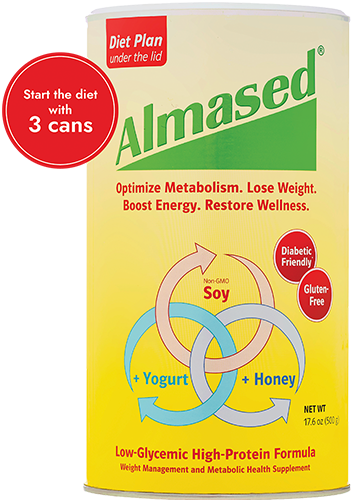
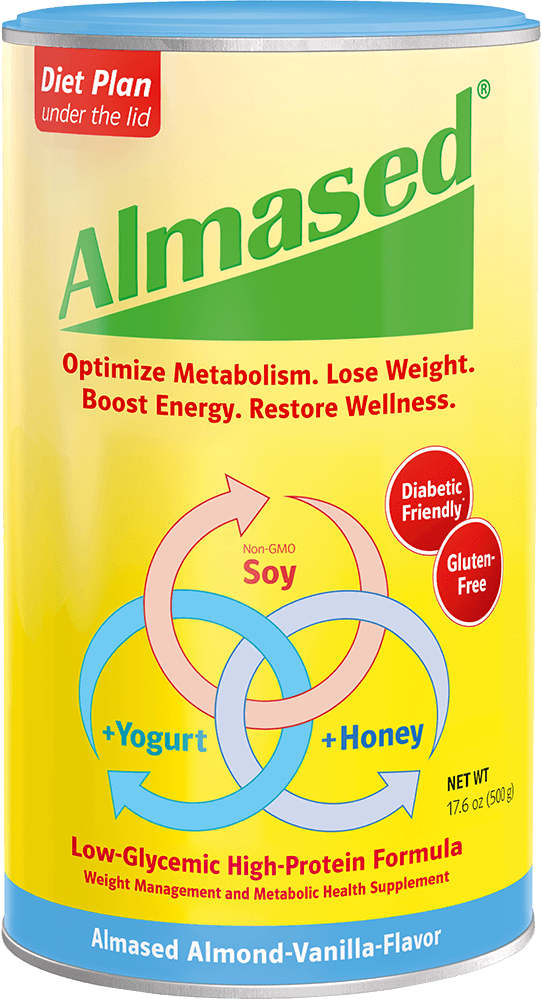
Berg, who has studied obesity for 20 years, has found another way to protect muscle mass during weight reduction programs. His discovery emerged in the first part a yearlong clinical study he is conducting with patients who are receiving Almased as a diet supplement. Almased is a natural soy-based multi-protein powder that is fermented using a patented manufacturing process.

After six months, instead of losing muscle mass, Berg’s patients lost fat. In fact, 100 percent of the total weight loss was fat.

Berg concluded that to lose fat rather than muscle, the body must receive large, ingestible amounts of high quality amino acids to support the body’s nutritional needs. Without this support, the body often consumes its own muscle to satisfy the protein requirements.

Amino acids are the key
Amino acids are critical to normal, healthy living. Besides being the building blocks of protein, they serve our hormones and facilitate the transmission of chemical messages from our nerves. If a person does not receive enough of the right kind of protein from the diet, the body turns to its own muscle mass for the protein. So it must have amino acids to function properly.

Berg said that Almased contains a high concentration of branched amino acids, like soy protein peptides. These branched-connected amino acids and soy protein peptides build the bio chemical basis for the body's immune-competent cells and regular cells, creating plenty of energy for well-functioning cell exchange. Three branched amino acids - valine, leucine, and isoleucine - are metabolized in muscle tissue, which is essential for muscle synthesis.

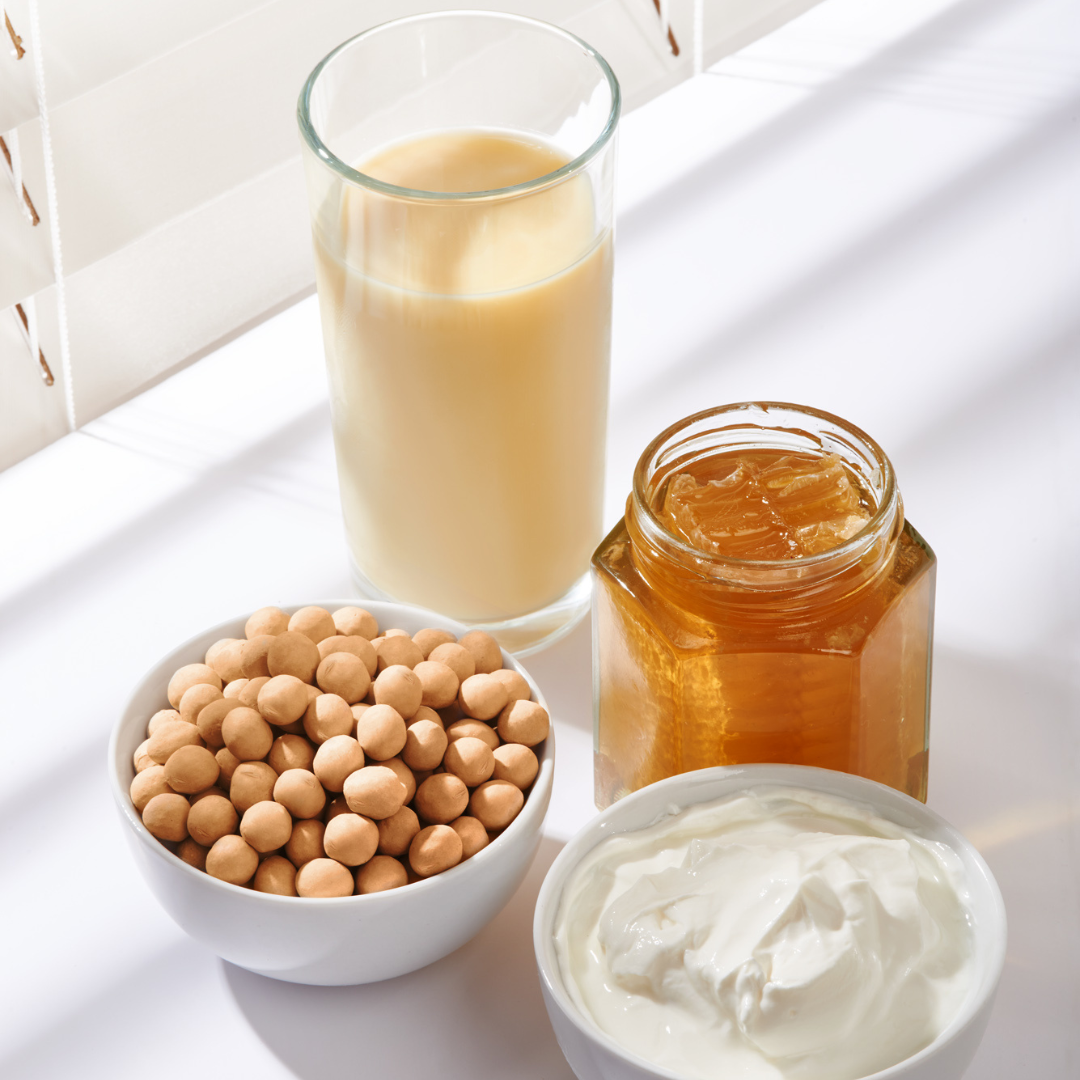
“With Almased, the muscle's cells are well supported,” said Berg, noting that by using two protein sources, soy and skim milk yogurt powder, Almased provides the correct quantity of amino acids to protect muscle cells during a calorie reduction program. The multi-protein formula supplies a rich assortment of all amino acids, including the ten that are notoriously difficult to retrieve through normal meals.

Almased’s patented fermentation process also protects the quality of the amino acids. Rudolf Keil, a licensed pharmacist and health and nutrition consultant for Offizinpharmacy in Grevenbroich, Germany, explains why Almased chose biological fermentation over more readily available techniques.

"In its raw form, soy can be difficult for some people to digest and the company needed to address this possible side effect," said Keil, who consults with Almased. "One possibility was to ‘pre-digest,’ or hydrolyze the soy.”

This process, however, “is a kind of rape of natural protein compositions,” because the chemical procedure uses acid and solutions at a temperature of 110-degree Celsius, he said.

Instead, Almased created a biological solution, which it patented, to avoid altering the protein's amino acids. And, with Almased's high quantity of essential amino acids, the cells can absorb them easily, providing better muscle protection.

Why Almased has success
With a weight-reduction program that incorporates Almased, people lose fat and retain muscle. Losing fat while maintaining muscle mass means a higher metabolism, a condition that burns fat more efficiently on an ongoing basis.

Dieters on Almased are well nourished and are sustaining muscle - a vital component to every healthy body. In fact, dieters reported feeling so energetic and positive about their weight loss during Berg's study that they were able to stick with the diet at an uncommon rate. Ninety-five percent of the participants continued the program through out the six months.

Home | Articles | Herbal Products | About Us | Contact Us | Sitemap |Fibronol